
Dear Investors,
In Q2 we saw ongoing regulatory battles in the US market. We believe the worst is behind us and pro-crypto voices start sounding louder in the US institutions. The macroeconomic situation is relatively stable at current levels after a period of turbulence, which is a positive aspect for the markets. We anticipate a series of bullish events with the BTC halving, BTC spot ETF, and regulatory certainty in a growing number of markets, notably in Asia, serving as significant catalysts in the foreseeable future. Let’s dive into the key moments and figures of the second quarter of 2023.
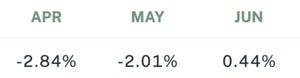
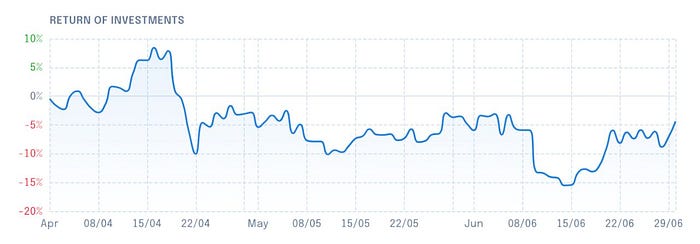
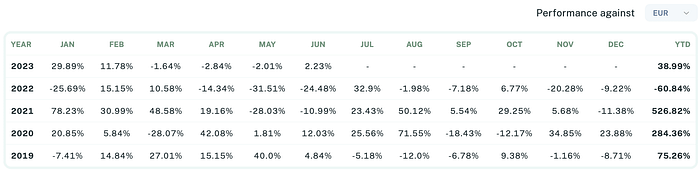
In the Q2 of 2023, Sigil Core recorded -4.37% vs EUR, -3.94% vs USD, -10.13% vs BTC.
Sigil Core Net Performance vs EUR Q2 2023
Macro situation
The US Federal Reserve (FED) kept interest rates unchanged in June, maintaining the status quo. Two more rate hikes are expected later this year but those should be small 25 points. China’s central bank (PBOC) reduced benchmark lending rates by 10 basis points to stimulate the slowing economy, but market response was limited, suggesting skepticism about the effectiveness of the rate cuts.
Further rate hikes could further distort the stability of selected sectors, particularly in banking, which faces significant challenges and risks. In May, First Republic Bank collapsed and was sold to JPMorgan Chase, the second-largest U.S. bank failure since 2008. This, along with two previous bank collapses in March, led to tightened lending and contributed to an economic slowdown.
Chokepoint 2.0 (U.S. crypto crackdown continues)
We in crypto like to say our goal is to displace banks. We see them as remnants of the old analog world — struggling to adapt to the new digital era. Most of the technical infrastructure runs on 40 year old Cobol code maintained and understood only by a few soon-to-be retired engineers. Thanks to this technical debt, regulation and old institutional structure of banks most of us would agree that banking is not user friendly, nor pleasant experience. We believe blockchain provides radically more efficient financial infrastructure with the potential to disrupt most of the current banking sector. Banks will be forced to adapt, ditching their old, opaque, frankenstein technological infrastructure from last century and integrate into the new, open, more transparent and efficient blockchain infrastructure. At least this is one of the long term theses for crypto and DeFi.
However! We need to admit banking still plays a crucial role in the crypto industry as it is necessary for onboarding (and off ramping) of “old capital” into crypto. Our industry cannot exist in a vacuum. Banking and access to it is now being used as one of the pressure points against the crypto industry in what is called Operation Chokepoint 2.0 (mentioned in our previous letter).
This pressure against the crypto industry (mostly applied by the SEC), has various political motives. We can only speculate, but some the most obvious motives seem to be:
- Tighter capital controls in the face of deglobalization and increased geopolitical turmoil. Best example is sanctions against Russia. The West is afraid crypto could be used to bypass some of these sanctions.
- Clearing the space before introducing some sort of CBDC (central bank digital currency), or rather a central bank controlled “blockchain” infrastructure, enabling much tighter, more efficient and direct control of the digital dollar.
- Pushing out crypto native businesses in order to make space for traditional financial players to capture the crypto space, who have better ties with the establishment.
We have seen SEC lawsuits against Binance and Coinbase and classifying at least 68 cryptocurrencies as securities (excluding Bitcoin and Ether)..
Most recently, however, in the court ruling, XRP was deemed not a security when traded on digital asset exchanges.
We expect similar results in judicial ruling will occur, as we believe the US court system is still fairly independent from policymakers and many “grown ups” in the US understand the risk of losing the crypto innovation race against other major powers.
Talking about other major powers, Asian countries view Web3 as an opportunity. The Hong Kong Monetary Authority urges major banks (HSBC, Standard Chartered, Bank of China) to open accounts for crypto exchanges as Hong Kong aims for global crypto hub status. Beijing released a white paper with analysis and recommendations promoting Web 3.0 and Japan approved the “Cool Japan” white paper, plans a digital yen pilot and startup-friendly regulatory changes, including tax exemptions.
The 2022 Global Crypto Adoption Index Top 10 by chainalysis:
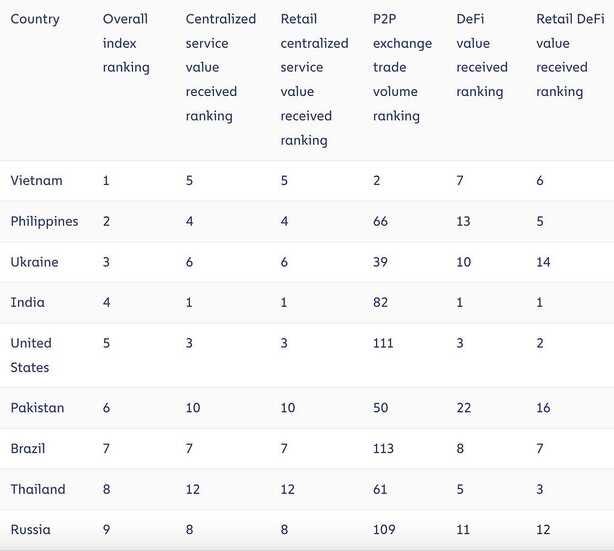
Please note that the Asia Pacific region is the largest gaming market by revenue and presents a tremendous opportunity for the Web3 gaming use-case.
Coinbase
In the SEC lawsuit, Coinbase is accused of operating without proper registration as a broker, exchange, and clearing agency, depriving investors of necessary safeguards. This led to a 20% decline in the company’s stock price. Coinbase argues that the SEC lacks jurisdiction as the assets on their platform are not considered securities, citing the Howey case as precedent.
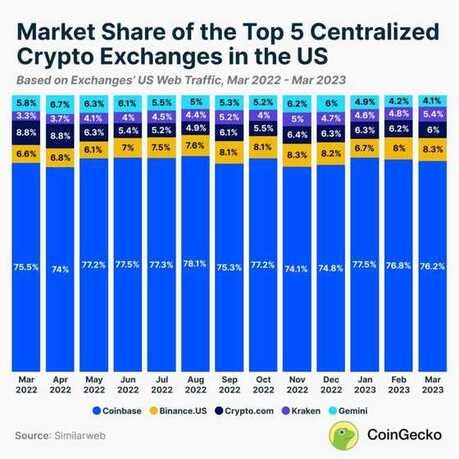
As you may have noticed, Sigil holds a significant position in Coinbase, despite the above mentioned risk.. Our analysis led us to believe $COIN was fundamentally undervalued and the market overestimated the risk of SEC lawsuit (which we are strongly convinced Coinbase will eventually win). Coinbase is well positioned to capture the exchange market in the USA. With Binance being pushed out and FTX no longer existing, Coinbase now controls over 75% of US market share.
Apart from that COIN stock gives investors exposure to a pretty substantial portfolio of Coinbase Ventures (unknown valuation but we believe it to be in the lower 10 digit realm), revenues from their ETH liquid staking derivative product and potential future upside and synergies from their own optimistic roll-up Base, which they recently released. Base was met with enthusiasm from the developer crypto community and is already seeing promising adoption from top tier projects such as Parallel.
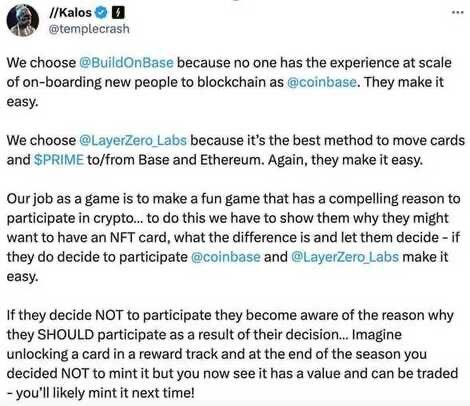
COIN is listed on Nasdaq which reduces regulatory risk and boosts credibility. Furthermore, the majority of institutions filing for Bitcoin ETF listed Coinbase custody as their custodian of choice, which will drive significant institutional revenue to Coinbase if (when) Bitcoin ETF passes the scrutiny. Both BlackRock and Fidelity chose Coinbase as their key partner for the Bitcoin ETF which is the highest possible endorsement from the TradFi world.
Last but not least, the very fact that COIN is a company stock listed on NASDAQ makes its profile as an investment asset very different from crypto assets, potentially attracting a different type of investors who don’t want to, or can’t invest in crypto directly.
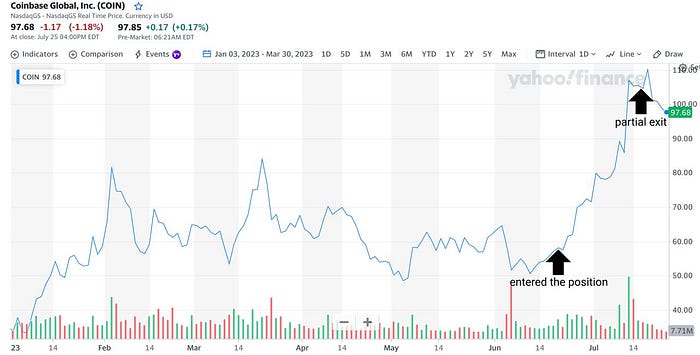
Overall, we saw COIN in the range of $USD 40–60 as undervalued and entered a significant long position. After the recent ETF news and favorable ruling towards XRP vs SEC case, the market recognized the derisking event and growth potential of Coinbase, sending the COIN price above $USD 100. This triggered our planned partial exit from the position. We plan to hold the rest of our position at least until there is more clarity around the Bitcoin ETF and SEC case.
BTC spot ETF
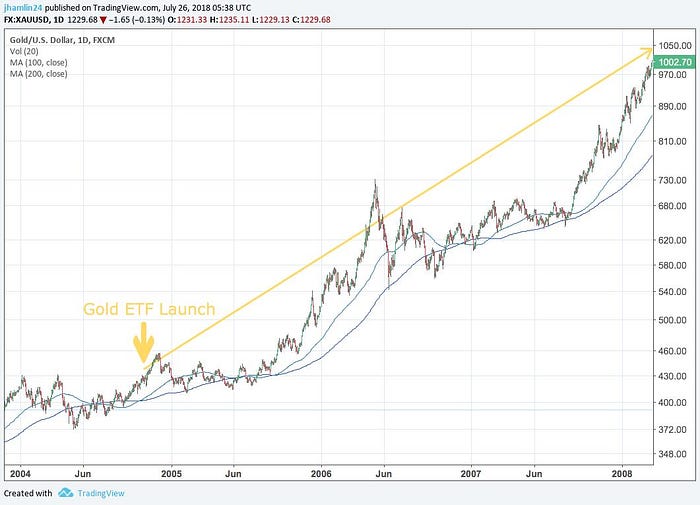
Following the SEC’s approval of BTC futures ETFs in October 2021, there is now significant interest in launching BTC spot ETFs. These sought-after instruments could provide opportunities for both institutional and novice investors to access BTC and attract substantial capital into the market. Major players like BlackRock, the world’s largest asset manager with over $9 trillion in Assets Under Management, Fidelity Investments, Ark Invest, and others have applied for BTC spot ETFs.
We believe approval of one or several Bitcoin ETFs would lead to vast increase in demand, mostly driven by institutions seeking for alternative investment exposure who currently cannot touch Bitcoin for regulatory reasons.
We don’t need to remind you what happened with gold market when Gold ETFs were introduced:
Majors continue to be at forefront
It’s clear that BTC has been leading the market this year so far, with over 10% year-to-date growth in the total market cap. In Q2 BTC hit a more than 1-year high in the midst of the BlackRock ETF announcement.
Currently we have approximately 50% of our portfolio in major cryptocurrencies, namely ETH and BTC, which is a 10% increase compared to the start of the year. These assets have proven to perform well during uncertain and transitory market conditions. We have also reduced our stablecoin holdings from approx. 23% to 10%, considering this as an accumulation phase of the market cycle and taking the opportunity to buy back in.
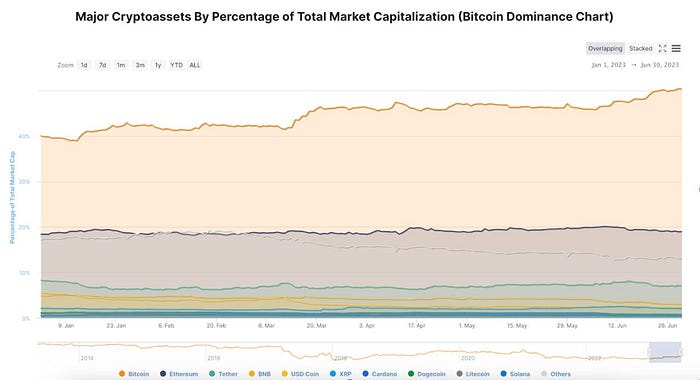
In the light of recent developments, BTC’s role as an asset in the realm of traditional finance continues to gain traction and prove its significance on the market.
On the other hand the innovation thesis for BTC seems to be lacking exciting developments, with only tail innovations such as ordinals or BRC-20 (token standard that uses ordinal inscriptions to enable the minting and transfer facilities of fungible tokens on the Bitcoin blockchain).
We also need to mention the upcoming BTC halving, which is only 10 months away (April 2024). The halving event which occurs every 4 years, each time in the past resulted in a positive price shock. We will dive deeper into the BTC halving and its effects in a dedicated article soon, because there are important concepts to understand for our investors.
Our game plan for the next 2 quarters is to keep holding majors and select alternative high conviction assets, and slowly rebalance out of majors at a good time in the signs of the crypto market entering another bull phase of its 4 year cycle. Of course we remain flexible to adjust this strategy in face of new realities on the markets.
Solana
Crypto protocols with native assets like BTC, ETH, and others will gain a monetary premium due to their utility and investor appeal. Currently, the Ethereum ecosystem leads this narrative, and we are heavily invested in it.
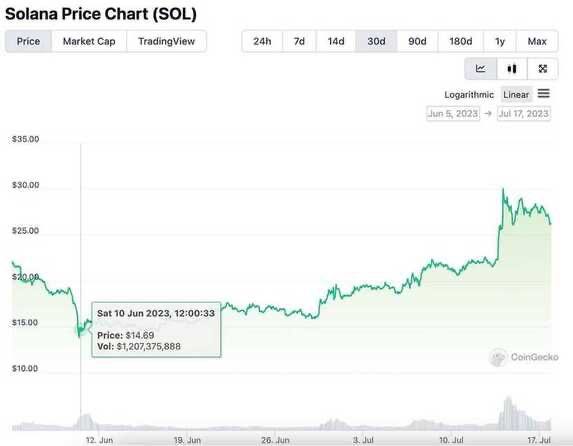
Solana (SOL) provides a cheap and fast layer 1 blockchain with very different technical and security trade offs than Ethereum. Unlike Ethereum which scales in layers, Solana aims to scale on its base layer via parallelisation. In June we decided to use the market sell off and scale back into SOL position, as we are long term bullish on its potential given the major technological improvements, developer activity and its lively gaming/NFT ecosystem. The investment doubled since.
Parallel
One of our high conviction positions from the Web3 gaming space is Parallel. It’s worth mentioning their new innovative game Colony. Colony is a simulation game, set in the Parallel sci-fi universe and utilizing the new AI LLM (Large Language Models) to populate the world with characters and is powered by Coinbase Layer 2 Network Base for its in-game assets.
Colony offers an immersive experience where players interact with their AI Avatar which operates autonomously based on its memory and personal history. Avatars are autonomous AI characters but the player has some agency to influence their behavior by chat interactions with the Avatar. Each Avatar is represented as a unique NFT and has its own wallet to hold Tokens and NFTs. These assets can be provided by the player or acquired through in-game activities such as trading or farming resources.
In Colony, players can own land, engage in passive activities such as growing trees, witness the AI writing its own code and participate in polls through the Colony newspaper. Moreover, players can manage their inventory, use loudspeakers for propaganda and experience dynamic stat points that adjust based on actions, such as reduced energy resulting in slower movement. Everything within the Colony simulation is stored on a blockchain, giving AI-generated possessions and actions tangible consequences. As a player, you collaborate with your AI Avatar to advance your mission within the evolving world of Colony. We believe Colony could introduce a brand new genre into web3 gaming powered by AI.
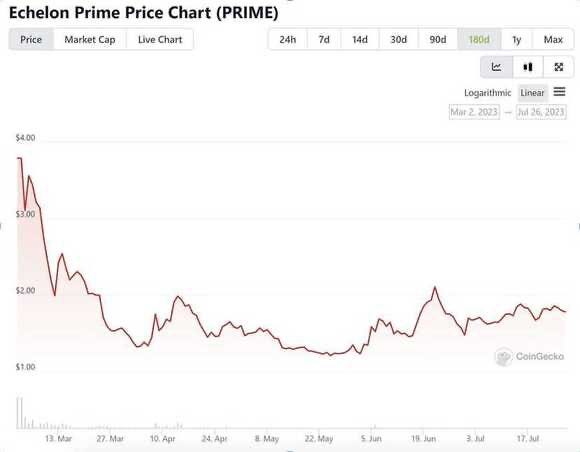
Furthermore the greatly anticipated Private Beta launch of Parallel TCG (their first game) is launching on 31 July. This will test all systems including PRIME token reward loops. We believe PRIME token has bottomed out in Q2 and could react positively in Q4 and especially in 2024 once the Parallel game economies are in full swing. This gives investors a great opportunity to accumulate PRIME and it won’t be surprising to you when we say we started doing so.
Conclusion
The recent 2 years were probably the most difficult period for the crypto industry ever. However, as always, the technology survived and continues to bring innovations in various areas from finance to gaming. The increasing number of use cases makes us very optimistic going forward. Nobody knows the future, but we believe that we are now in the last third of the consolidation phase of the market cycle, with bullish tailwinds in the form of Bitcoin halving, ETF approval, and improving regulatory and macro environment ahead.
Thank you for your ongoing trust in Sigil fund.